
Digital advertising has become one of the most effective ways for businesses to reach potential customers online. However, running successful campaigns requires understanding important advertising metrics that measure performance and spending. One of the most commonly used terms in online advertising is CPC.
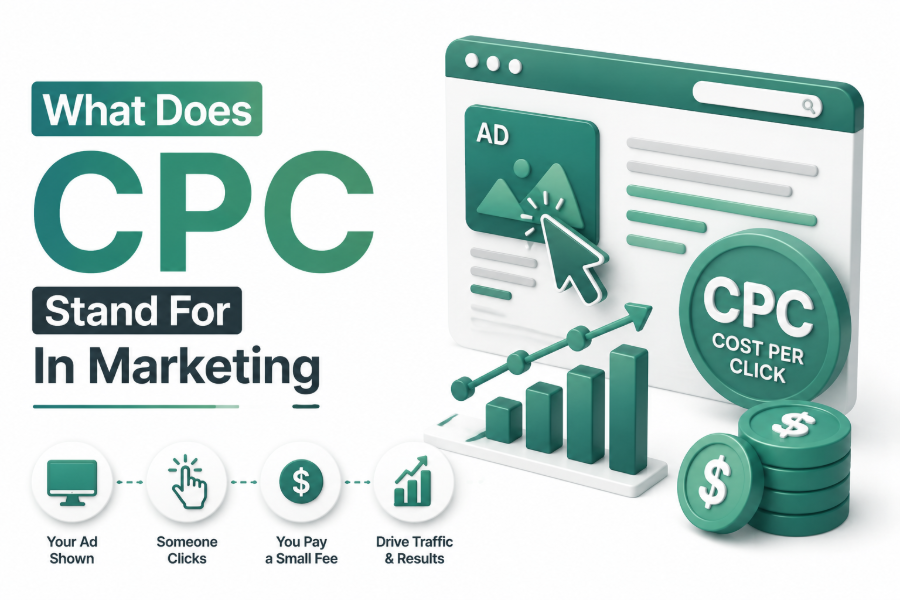
CPC stands for Cost Per Click, which refers to the amount a business pays each time someone clicks on an advertisement. This metric helps advertisers understand how much they are spending to bring visitors to their websites, landing pages, or digital platforms.
Whether a business runs Google Ads, social media campaigns, or display advertising, CPC plays an important role in managing budgets and evaluating campaign performance. Understanding how CPC works allows marketers to make better decisions, improve targeting, and achieve stronger advertising results.
The Meaning Behind Cost Per Click in Marketing
Cost Per Click is an online advertising pricing model where advertisers pay only when someone interacts with their advertisement by clicking on it. Instead of paying simply for displaying an ad, businesses pay based on actual user engagement.
This model is widely used across search engines, social media platforms, and advertising networks. It allows advertisers to focus their budget on attracting visitors who show interest in their products, services, or content.
For example, if a company runs an advertisement and receives 500 clicks while spending $250, the CPC would be $0.50 per click. This calculation helps marketers understand the direct cost of attracting website visitors.
CPC advertising is commonly used in:
- Search engine advertising
- Social media marketing campaigns
- Display advertising
- Shopping advertisements
- Mobile advertising
How CPC Works in Digital Advertising Campaigns
CPC works through advertising platforms where businesses compete for ad placements. When multiple advertisers want to reach the same audience, platforms use bidding systems to determine which advertisements appear and where they are positioned.
Advertisers usually set a maximum amount they are willing to pay for each click. The platform then evaluates different factors, including bid amount, advertisement quality, and relevance, before displaying ads.
A higher bid does not always guarantee the top position. Advertising platforms also consider user experience and content quality because their goal is to show useful advertisements to users.
The CPC process generally includes:
- Advertiser creates an advertisement
- Target audience is selected
- Maximum CPC bid is established
- Users interact with the advertisement
- Advertiser pays for each click received
The Importance of CPC in Marketing Strategy
CPC is an important metric because it helps businesses understand how efficiently they are spending money on advertising. Without tracking CPC, marketers may struggle to determine whether their campaigns are generating valuable traffic at a reasonable cost.
A low CPC can indicate that a business is attracting visitors efficiently. However, a low CPC alone does not guarantee success. The quality of traffic and the ability to convert visitors into customers are equally important.
Successful marketers analyze CPC alongside other performance metrics to create balanced campaigns that achieve business goals.
CPC helps marketers evaluate:
- Advertising budget efficiency
- Campaign performance
- Audience targeting effectiveness
- Traffic acquisition costs
CPC Compared With Other Marketing Metrics
CPC is one of many digital marketing metrics used to measure advertising performance. While CPC focuses on the cost of receiving clicks, other metrics measure different parts of the customer journey.
For example, CPM measures the cost of showing advertisements, while CPA focuses on the cost of achieving specific actions such as purchases or sign-ups. Each metric provides different insights depending on campaign objectives.
Understanding these differences helps marketers choose the right measurement approach for their campaigns.
Common advertising metrics include:
- CPC (Cost Per Click)
- CPM (Cost Per Thousand Impressions)
- CPA (Cost Per Acquisition)
- CTR (Click-Through Rate)
- ROAS (Return on Ad Spend)
How CPC Is Calculated
Calculating CPC is simple and helps businesses understand advertising expenses. The formula divides the total advertising cost by the number of clicks received.
The CPC formula is:
CPC = Total Advertising Cost ÷ Total Number of Clicks
For example:
A business spends $500 on a campaign and receives 1,000 clicks.
$500 ÷ 1,000 = $0.50 CPC
This means the business pays an average of $0.50 for every click generated through the campaign.
Tracking CPC regularly allows marketers to identify whether advertising costs are increasing or decreasing over time.
Factors That Affect CPC Rates
CPC rates vary depending on several factors, including industry competition, audience targeting, keyword demand, and advertisement quality. Some industries naturally have higher CPC rates because businesses compete heavily for valuable customers.
For example, industries such as finance, insurance, and legal services often have higher CPC costs because individual customers can generate significant revenue.
Businesses should focus on improving campaign quality rather than only trying to reduce CPC. A slightly higher CPC can still be profitable if the traffic generates valuable conversions.
Factors influencing CPC include:
- Keyword competition
- Industry demand
- Audience location
- Advertisement quality
- Landing page experience
The Relationship Between CPC and Keyword Selection
Keywords play a major role in determining CPC costs, especially in search advertising. Popular keywords with strong commercial intent often have higher competition and increased click costs.
Choosing the right keywords allows businesses to reach relevant audiences while controlling advertising expenses. Long-tail keywords often have lower competition and can provide more targeted traffic.
For example, “marketing agency” may have higher CPC competition than “small business marketing agency in Texas” because the second keyword targets a more specific audience.
Effective keyword selection involves:
- Researching search intent
- Finding relevant keyword opportunities
- Balancing competition and value
- Monitoring keyword performance
CPC and Quality Score Connection
Platforms like Google Ads consider quality factors when determining advertising costs. A higher-quality advertisement can sometimes achieve better positions with lower CPC compared to competitors.
Quality Score evaluates factors such as advertisement relevance, expected click-through rate, and landing page experience. Improving these areas can help businesses achieve better campaign efficiency.
A strong Quality Score can reduce advertising costs while improving visibility.
Businesses can improve Quality Score by:
- Creating relevant advertisements
- Improving landing pages
- Using targeted keywords
- Increasing user engagement
Ways to Reduce CPC in Advertising Campaigns
Reducing CPC does not mean simply lowering bids. Effective CPC optimization focuses on improving overall campaign quality and targeting the right audience.
Businesses should analyze performance data regularly and remove strategies that waste advertising budget. Small improvements in targeting, content, and user experience can create meaningful cost reductions.
Lower CPC strategies include:
- Improving advertisement relevance
- Testing different headlines
- Refining audience targeting
- Using negative keywords
- Optimizing landing pages
The Role of CPC in Google Ads Campaigns
Google Ads is one of the most popular platforms where CPC advertising is used. Businesses bid on keywords to display advertisements when users search for related products or services.
Google uses an auction system to determine advertisement placement. The final CPC depends on competition, quality factors, and advertiser bids.
Understanding CPC helps businesses manage Google Ads budgets more effectively and improve campaign profitability.
Google Ads CPC depends on:
- Keyword competition
- Bid strategy
- Quality Score
- Search intent
- Market demand
CPC Strategies for Social Media Advertising
Social media platforms also use CPC pricing models. Businesses can create campaigns where they pay only when users click advertisements leading to websites, products, or landing pages.
Social media CPC can vary depending on audience targeting, advertisement design, platform competition, and campaign objectives.
Effective social media CPC management requires testing different audiences and creative formats.
Social media CPC optimization includes:
- Testing advertisement designs
- Refining audience groups
- Monitoring click quality
- Improving engagement rates
Common CPC Mistakes Marketers Should Avoid
Many businesses focus only on lowering CPC without considering traffic quality. A cheap click is not valuable if visitors do not engage or convert.
Another common mistake is targeting overly broad audiences. Broad targeting may generate many clicks but waste budget on users who are unlikely to become customers.
Successful CPC campaigns require balancing cost, relevance, and conversion potential.
Common mistakes include:
- Focusing only on cheap clicks
- Ignoring conversion tracking
- Using irrelevant keywords
- Poor landing page optimization
Measuring CPC Campaign Success
CPC is only one part of campaign evaluation. Businesses should analyze CPC alongside other metrics to understand the complete performance picture.
A campaign with a higher CPC may still be successful if it generates valuable customers and strong revenue. Similarly, a low CPC campaign may fail if visitors do not take meaningful actions.
Marketers should review multiple performance indicators.
Important metrics include:
- CPC
- Conversion rate
- Cost per acquisition
- Return on ad spend
- Customer lifetime value
Improving CPC Through Better Landing Pages
Landing page quality directly affects advertising performance. When users click an advertisement and find useful, relevant information, they are more likely to continue toward conversion.
A poor landing page can waste advertising budget because visitors leave without taking action. Improving page speed, design, messaging, and usability can increase campaign effectiveness.
Landing page improvements include:
- Clear calls to action
- Relevant content
- Fast loading speed
- Mobile-friendly design
- Simple navigation
The Future of CPC Advertising
CPC advertising continues to evolve as technology, automation, and artificial intelligence improve digital marketing platforms. Modern advertising systems increasingly use machine learning to optimize bids and target audiences.
Businesses that understand CPC fundamentals will be better prepared to manage changing advertising environments. Successful campaigns will depend on combining data analysis, creative strategies, and customer-focused messaging.
CPC will remain an important metric because it provides valuable information about the cost of attracting online visitors.
Conclusion
CPC is one of the most important advertising metrics used in digital marketing. It helps businesses understand how much they spend to attract website visitors through paid campaigns. Knowing what does CPC stand for in marketing allows marketers to manage budgets, improve targeting, and measure advertising efficiency. A successful CPC strategy focuses not only on reducing click costs but also on attracting valuable visitors who contribute to business growth.
FAQ’S
What does CPC mean in marketing?
CPC means Cost Per Click, a digital advertising model where businesses pay a specific amount whenever someone clicks on their advertisement. It helps measure the cost of attracting visitors through paid marketing campaigns.
Is a lower CPC always better?
A lower CPC is not always better because cheaper clicks may not generate valuable customers. Businesses should focus on attracting relevant traffic and achieving profitable conversions rather than only reducing click costs.
How can businesses improve CPC performance?
Businesses can improve CPC performance by optimizing keywords, improving advertisement quality, refining audience targeting, and creating better landing pages that encourage visitors to complete valuable actions.
What is a good CPC rate?
A good CPC rate depends on the industry, audience, location, and campaign goals. A profitable CPC is one that generates valuable traffic and produces a positive return compared to advertising costs.
Does CPC affect Google Ads ranking?
Yes, CPC can influence Google Ads performance, but ranking also depends on factors such as Quality Score, advertisement relevance, and landing page experience. Higher-quality ads can achieve better positions with efficient costs.
0 Comments