
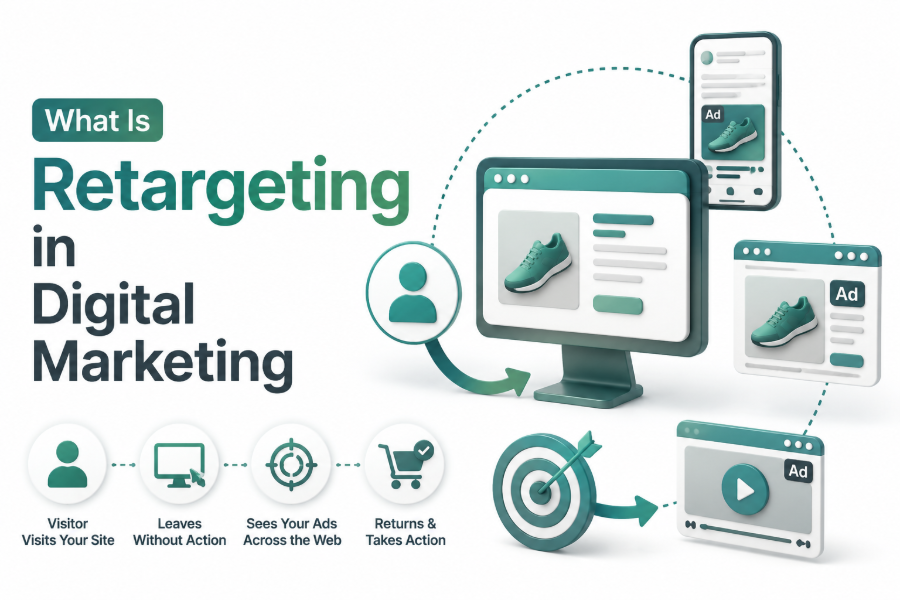
Many businesses spend time and money bringing visitors to their websites, but a large percentage of those visitors leave without taking any action. They may browse products, read content, compare services, or add items to their cart but leave before completing a purchase or inquiry.
This is where retargeting becomes valuable. Retargeting allows businesses to reconnect with people who have already interacted with their website, advertisements, or online content. Instead of reaching completely new audiences, businesses can focus on people who already showed interest.
In today’s competitive digital environment, customers often need multiple interactions before making a decision. Retargeting helps brands stay visible during the customer journey and encourages previous visitors to return when they are ready to take action.
The Basics of Retargeting in Digital Marketing
Retargeting is a digital advertising strategy that targets users who have previously interacted with a business online. These interactions may include visiting a website, viewing a product page, downloading content, watching a video, or engaging with social media posts.
The main purpose of retargeting is to remind potential customers about a brand after their first interaction. Instead of allowing interested visitors to forget about a business, retargeting keeps the brand visible through personalized advertisements.
Unlike traditional advertising methods that target broad audiences, retargeting focuses on users who already have some level of interest. This makes campaigns more relevant and often improves the chances of generating conversions.
Retargeting commonly uses:
- Website visitor data
- Cookies and tracking pixels
- Customer lists
- Advertising platforms
- User engagement information
How Retargeting Campaigns Work
Retargeting campaigns work by collecting information about users who interact with a website or digital platform. When someone visits a website, a tracking code records specific actions and allows advertising platforms to recognize that visitor later.
After leaving the website, the user may see advertisements from the same business while browsing other websites, using social media platforms, or watching online content. These ads remind the person about products, services, or information they previously viewed.
The goal is not to repeatedly show the same advertisement to everyone. Effective retargeting uses audience segmentation to deliver more relevant messages based on user behavior.
The basic retargeting process includes:
- User visits a website
- Tracking technology records interaction
- User joins a retargeting audience
- Customized advertisements are displayed
- User returns and completes an action
The Difference Between Retargeting and Remarketing
Retargeting and remarketing are often used interchangeably, but they can involve different approaches. Retargeting usually focuses on online advertising through platforms such as Google Ads, Facebook Ads, and other advertising networks.
Remarketing traditionally refers to reconnecting with existing customers or leads through channels like email campaigns. However, modern marketing discussions often use both terms to describe strategies designed to bring previous visitors or customers back.
Both strategies share the same goal: reconnecting with people who already know the brand. The difference mainly depends on the channel and method used to reach the audience.
Key differences include:
- Retargeting focuses mainly on paid advertisements
- Remarketing often uses email communication
- Both target previous interactions
- Both support customer retention and conversions
The Importance of Retargeting for Modern Businesses
Most website visitors do not convert during their first visit. They may need more time to compare options, research competitors, or consider pricing before making a decision.
Retargeting helps businesses stay connected with these potential customers during their decision-making process. By appearing at the right time with relevant messaging, brands can increase the possibility of returning visitors becoming customers.
For businesses with longer sales cycles, retargeting creates valuable touchpoints that maintain awareness and encourage future actions.
Retargeting helps businesses:
- Recover lost opportunities
- Increase brand recognition
- Improve conversion chances
- Reach interested audiences
How Retargeting Improves Conversion Rates
Conversion rates depend on reaching the right people with the right message. Retargeting improves this process by focusing advertising efforts on users who already demonstrated interest.
A visitor who viewed a service page has different buying intent compared to someone who has never heard of a brand. Retargeting allows businesses to create advertisements based on previous interactions.
For example, an online store can show product advertisements to visitors who viewed specific products but did not complete a purchase. This reminder can encourage them to return and finish the buying process.
Businesses can improve conversions through:
- Personalized advertisements
- Audience segmentation
- Relevant offers
- Timely reminders
Types of Retargeting Campaigns
Different businesses use different retargeting methods depending on their goals, audience, and marketing channels. Each type focuses on a specific stage of the customer journey.
Website retargeting is one of the most common methods. It targets users who visited specific pages and displays advertisements to encourage them to return.
Search retargeting, social media retargeting, and email-based campaigns provide additional opportunities to reconnect with interested audiences.
Common retargeting types include:
- Website visitor retargeting
- Social media retargeting
- Search retargeting
- Email retargeting
- Dynamic product retargeting
Website Visitor Retargeting Strategies
Website visitor retargeting focuses on people who have visited specific pages on a website. These users are valuable because they already showed interest in a business’s products, services, or information.
Businesses can create different audiences based on visitor behavior. Someone who visited a homepage may receive a different advertisement compared to someone who viewed a pricing page.
This approach allows companies to provide more relevant messages instead of showing generic advertisements to everyone.
Examples of website retargeting audiences include:
- Product page visitors
- Service page visitors
- Blog readers
- Cart abandoners
- Previous customers
Social Media Retargeting Opportunities
Social media platforms provide powerful retargeting options because users regularly interact with content, advertisements, and brand pages.
Platforms such as Facebook, Instagram, LinkedIn, and other networks allow businesses to create audiences based on previous engagement. Users who watched videos, clicked advertisements, or interacted with posts can receive targeted campaigns.
Social media retargeting helps businesses maintain relationships with audiences outside their websites.
Businesses can retarget people who:
- Watched videos
- Followed pages
- Engaged with posts
- Clicked advertisements
- Sent messages
Dynamic Retargeting for Personalized Advertising
Dynamic retargeting creates personalized advertisements based on products or services users previously viewed. This strategy is especially effective for ecommerce websites with many products.
Instead of showing the same advertisement to every visitor, dynamic campaigns automatically display relevant items based on user behavior.
For example, if someone views a specific pair of shoes but does not purchase, they may later see an advertisement featuring that same product or similar recommendations.
Dynamic retargeting improves advertising relevance through:
- Product-based recommendations
- Personalized messaging
- Automated advertisements
- Better customer experiences
The Role of Tracking Pixels in Retargeting
Tracking pixels are small pieces of code placed on websites to collect information about visitor actions. These pixels help advertising platforms understand user behavior and create targeted audiences.
When a visitor interacts with a website, the pixel records actions such as page views, button clicks, or purchases. This information helps businesses create more effective advertising campaigns.
Popular advertising platforms use tracking technologies to support retargeting campaigns.
Tracking pixels help measure:
- Website interactions
- Audience behavior
- Conversion activity
- Campaign performance
Benefits of Retargeting in Digital Marketing
Retargeting provides several advantages for businesses looking to improve marketing performance. Since campaigns focus on users who already know the brand, advertising messages often become more effective.
Businesses can reduce wasted advertising spending by targeting people who have shown interest instead of reaching completely unrelated audiences.
Retargeting also supports long-term brand awareness because customers repeatedly see the business during their online activities.
Major benefits include:
- Higher conversion opportunities
- Better audience targeting
- Improved advertising efficiency
- Stronger brand recall
- Increased customer engagement
Common Retargeting Mistakes Businesses Should Avoid
Although retargeting can be highly effective, poor campaign management can create negative experiences. Showing advertisements too frequently or targeting the wrong audience can reduce customer interest.
Another mistake is using the same advertisement for every visitor. Different users have different levels of interest, so campaigns should match user behavior.
Businesses should focus on creating helpful and relevant advertisements rather than simply increasing exposure.
Common mistakes include:
- Excessive ad frequency
- Poor audience segmentation
- Irrelevant messaging
- Ignoring customer journey stages
Creating an Effective Retargeting Strategy
A successful retargeting strategy requires planning, audience understanding, and continuous optimization. Businesses should first identify their goals and determine which audiences are most valuable.
For example, an ecommerce company may focus on abandoned carts, while a service company may target visitors who viewed consultation pages.
Combining retargeting with broader digital marketing strategies can create a complete customer acquisition system that supports awareness, engagement, and conversions.
A strong strategy includes:
- Clear campaign goals
- Proper audience segments
- Relevant advertisements
- Performance monitoring
Measuring Retargeting Campaign Performance
Tracking campaign performance helps businesses understand whether their retargeting efforts are producing valuable results. Different metrics provide insights into audience engagement and profitability.
Important measurements include clicks, conversions, return on advertising spend, and customer acquisition costs.
Regular analysis helps marketers improve advertisements, adjust audiences, and create better campaigns over time.
Important retargeting metrics include:
- Click-through rate
- Conversion rate
- Cost per conversion
- Return on ad spend
- Audience engagement
The Future of Retargeting in Digital Marketing
Digital advertising continues to change as privacy regulations, technology updates, and customer expectations evolve. Businesses need to create more responsible and user-friendly retargeting strategies.
Future retargeting campaigns will focus more on customer relationships, valuable content, and personalized experiences rather than repetitive advertisements.
Companies that use customer data responsibly and provide relevant messaging will have stronger opportunities to build trust and improve marketing results.
Conclusion
Retargeting helps businesses reconnect with people who have already shown interest in their products, services, or content. By using personalized advertisements, audience segmentation, and data-driven strategies, companies can improve conversions and maintain stronger customer relationships. The value of what is retargeting in digital marketing comes from its ability to bring potential customers back and create more opportunities from existing website traffic.
Frequently Asked Questions
What is the main purpose of retargeting?
The main purpose of retargeting is to reconnect with people who previously interacted with a business. It reminds potential customers about products or services and encourages them to return and complete desired actions.
How does retargeting increase sales?
Retargeting increases sales by showing relevant advertisements to users who already showed interest. Since these audiences are familiar with the brand, they are often more likely to return and make a purchase.
Is retargeting expensive for businesses?
Retargeting costs depend on the platform, audience size, and campaign goals. In many cases, it can be cost-effective because businesses target users who already have some interest rather than completely new audiences.
What platforms support retargeting campaigns?
Popular platforms that support retargeting include Google Ads, Facebook Ads, Instagram Ads, LinkedIn Ads, and other digital advertising networks that provide audience targeting options.
Is retargeting useful for small businesses?
Yes, retargeting is useful for small businesses because it helps them reconnect with previous visitors and maximize existing traffic. It allows smaller companies to compete by focusing advertising on interested audiences.
0 Comments